
Early history
The first known settlements in the Aberdeen area date back to 6000BC. These were hunter-gatherers settlements situated near the mouths of the two rivers in Aberdeen - the Dee and the Don. Around 400BC there was significant Celtic migration from the south of Scotland, and the Romans invaded a few hundred years later. Normandykes was a former Roman Marching Camp near Peterculter, a suburb of Aberdeen. Many battles were fought in Aberdeen, such as the Battle of Aberdeen, where Royalists fought Parliamentarians. Aberdeen Castle was destroyed in the 14th century to stop the English occupying it.
Aberdeen has an Ancient University - The University of Aberdeen. Founded in 1495 as Kings College, it was originally intended to train doctors, teachers and clergy for the Grampian region. Kings College Chapel is the oldest building of the University, having been constructed in 1498. A second University was founded later - Marischal College. It was founded in 1593 and was intended to teach like Protestant arts colleges that were commonplace throughout Europe at the time. This meant that for a while Aberdeen had the same number of Universities as the whole of England. The Universities were merged in 1860.
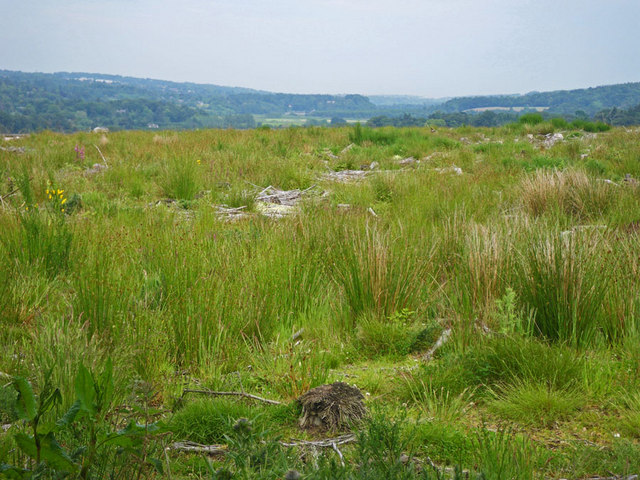 "Site of Normandykes Roman marching camp" by C Michael Hogan is licensed under CC BY-SA 2.0

The Railways and Industrialisation
The first railway in Aberdeen opened in 1850 - a line linking Aberdeen and Montrose that would later go on to be extended to reach Arbroath, which had links to both Edinburgh & Glasgow. Further lines also opened linking Aberdeen with Inverness, Ballater and the northern towns of Peterhead & Fraserburgh. The Royal Family would often use Deeside railway to travel to Ballater, near Balmoral Castle. Only the lines to Dundee and Inverness survived the Beeching Cuts of the 60s.
Aberdeen didn't see as much industrialisation as other cities in Scotland, such as Glasgow and Dundee. However, there was still sizeable industries, including paper-making and farming. Aberdeen gets the nickname 'The Granite City' from the large amount of Granite mined in quarries near the city. The most famous of these was Rubislaw Quarry which is one of the biggest man-made holes in Europe. Like a significant amount of industries in the rest of the UK, many of these closed in the 70s and 80s. The North East is still a major fishing location, however most fish tends to be landed at Peterhead, 50km north of Aberdeen.
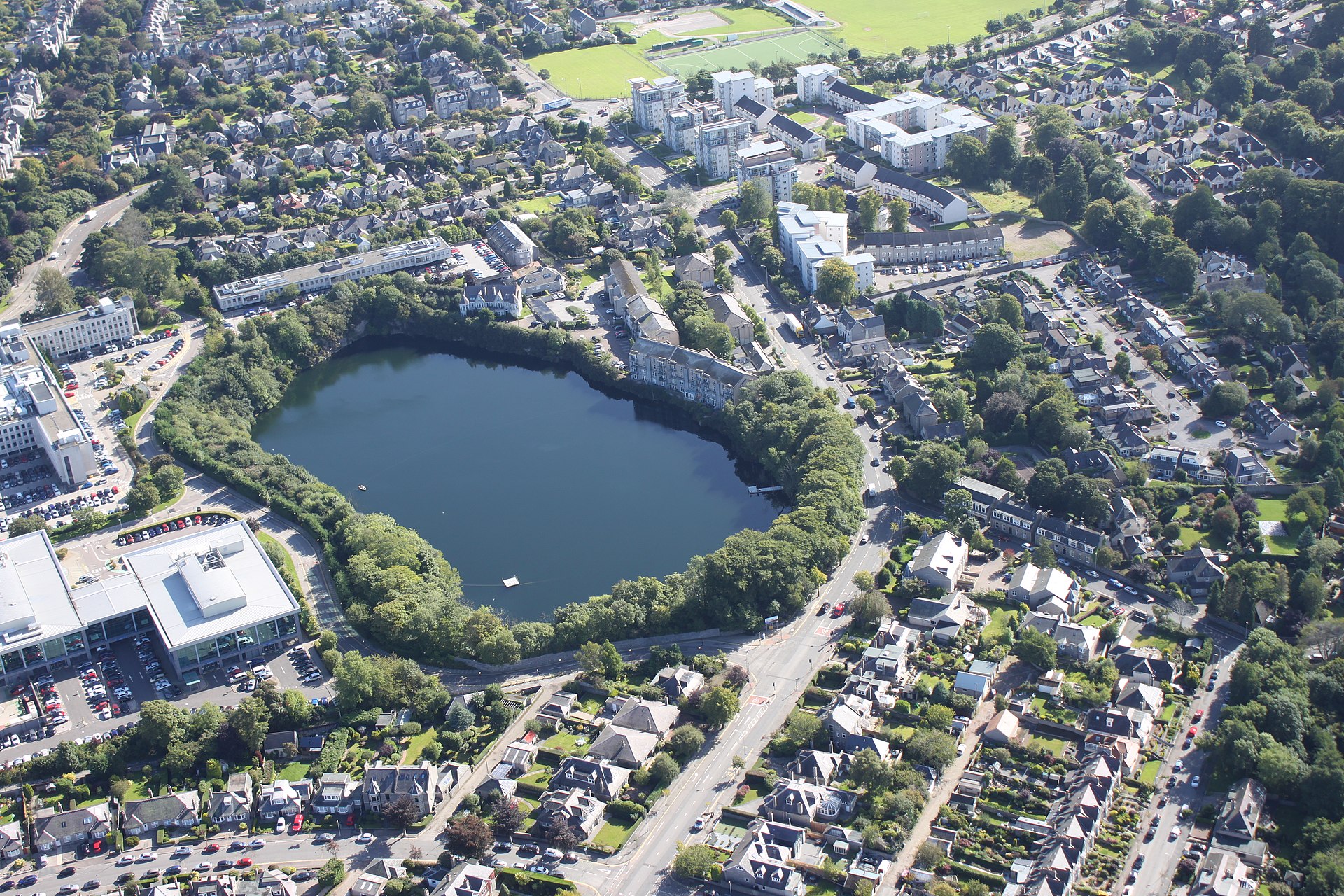 An aerial photograph of Rubislaw Quarry by Alanatabz is licensed under CC BY-SA 4.0

The Discovery of North Sea Oil
In the middle of the 20th century, scientists were theorising about there being oil in the North Sea, but the cost of drilling was prohibitly expensive. As technology advanced and the threat of the Middle East producing their own oil increased, development in the North Sea took off. BP were the first company to strike gas in the North Sea in 1965, with the first major field being discovered in 1970. The following boom in North Sea Oil provided Aberdeen with many well-paying jobs and an influx of population. The number of jobs estimated to have been created by this boom stands at over 500,000 - twice the population of the city. Aberdeen was crowned with being "The Oil Capital of Europe". It wasn't all great - the weather in the North Sea was quite dangerous and by 1980, the cost of developing technologies for North Sea drilling exceeded the cost NASA sending a man to the moon, according to the Time Magazine. Because of all the helicopter traffic required to transport workers to and from platforms, Aberdeen Airport became the world's busiest heliport.
The dangers of North Sea oil were realised on the night of 6th July 1988, when the platform Piper Alpha exploded and sank, killing 167 men. This event brought in new safety laws and awareness to the issues, but Aberdeen was changed forever. Since the heydey in the 70s and 80s, production has slowed and it is thought that North Sea oil production has peaked.
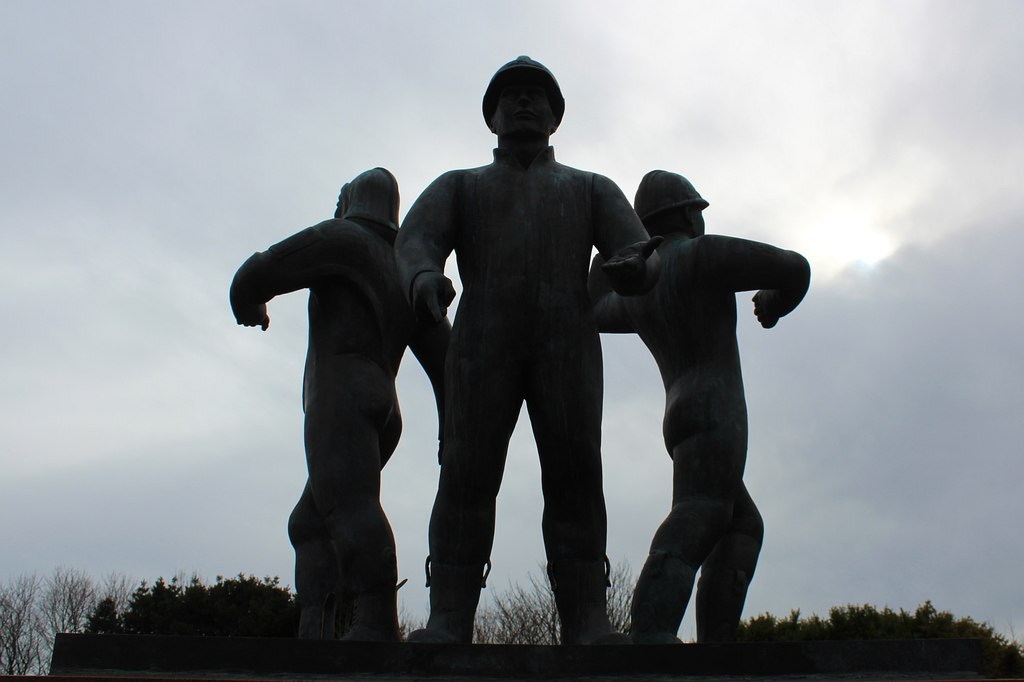 "Piper Alpha Memorial" by Bob Embleton is licensed under CC BY-SA 2.0
The Oil Downturn
Aberdeen has been said to be "recession proof" as even during a recession, people will need oil. During the 2008 recession, house prices were rising in Aberdeen faster than anywhere else in the UK, and the sector was strong enough that the effects of the recession were "barely felt". However, due to Aberdeen's economy being almost entirely based around oil, it wasn't going to last. Following high oil prices in 2011, the value crashed in 2013 - to nearly a quarter of what it was just a year previous. This meant that companies had to cut costs, and it resulted in significant redundancies in staffing. Across the UK, an estimated 65 thousand oil and gas jobs were lost.
More recently, Aberdeen is reinventing itself as the renewable capital of Europe as the need to switch away from fossil fuels becomes ever more apparent. It is hoped that this transition will save both the jobs of many Aberdonians and the Aberdeen economy itself. Steps have been made - there is a significant amount of renewable energy generation around Aberdeen and the wider Aberdeenshire region, and Aberdeen is a world-leader for deploying Hydrogen vehicles - many council vehicles and buses run on Hydrogen.
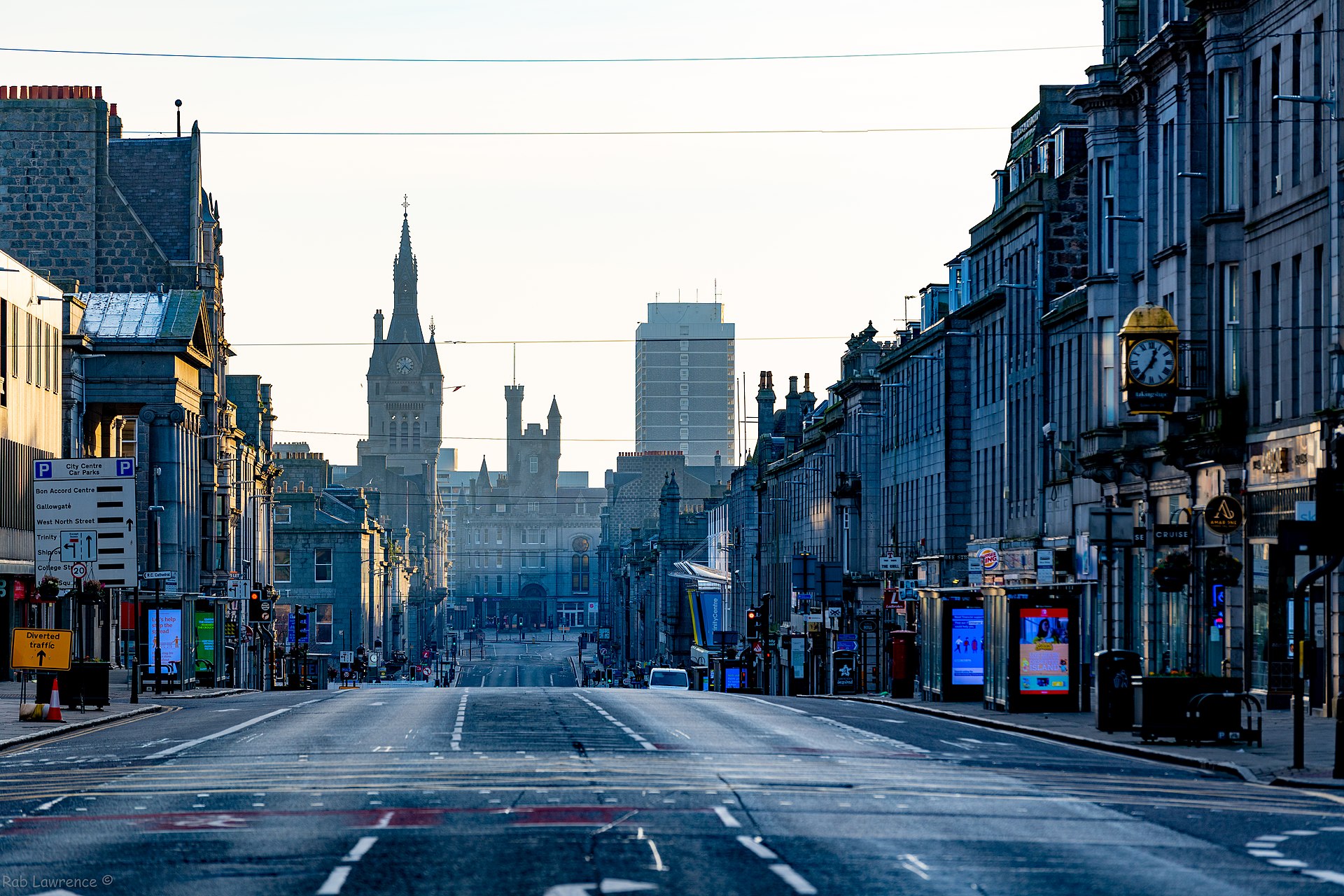 Union Street during the Pandemic by Rab Lawrence is licensed under CC BY-SA 2.0
.jpg)